Recycling and Sustainability for Commercial Driveway Cleaning
 Commercial driveway cleaning services today must go beyond surface appearance. Our approach to eco-friendly waste disposal area design for business premises focuses on capture, separation and beneficial reuse of materials removed during driveway and forecourt cleaning. By integrating an on-site silt trap, oil separator and dedicated recycling bays we reduce landfill contribution and keep contaminants out of storm drains. The goal: a measurable, verifiable recycling stream that turns waste into resources while maintaining clean, professional exteriors for clients.
We align with local borough waste separation standards—most councils now require a three-stream system of organics, mixed recycling and residual waste for commercial sites. Our operational procedures for driveway cleaning for businesses mirror these borough rules so that materials collected from pressure washing, swept debris and green waste are pre-sorted at source. That improves diversion rates and reduces cross-contamination at transfer stations.
 Our team monitors a recycling percentage target for every commercial drive cleaning contract. We aim for a minimum of 75% diversion of recyclable or reusable materials from general waste within 12 months of service start, with a long-term target of 85%. This metric covers: oil-recovered solids, metals, glass, plastic film from packaging, and green waste for composting. Targets are reviewed quarterly and reported to site managers to drive continuous improvement.
Sustainable Rubbish Gardening Area and Beneficial Reuse
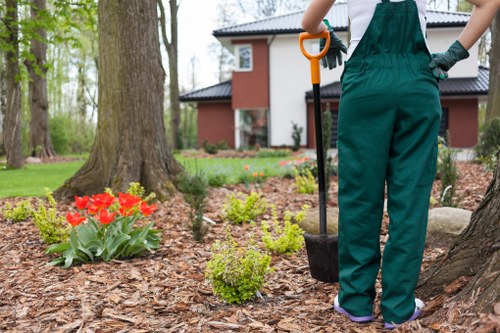
Creating a sustainable rubbish gardening area on commercial properties repurposes organic sweepings and green clippings into on-site compost and habitat features. For property managers of retail parks and industrial estates, our commercial drive cleaning services include recommendations for a small composting bay or green buffer strip that absorbs runoff, supports pollinators and stores carbon in soil. These living features both enhance curb appeal and reduce overall waste collection costs by converting the green fraction locally.
 We also coordinate with local transfer stations and civic recycling centres to ensure the non-compostable recyclables are processed correctly. Typical nearby facilities we use include borough transfer stations and municipal reuse depots where separated loads—concrete, metal, compostables and general recyclables—are weighed and documented. Using authorised transfer points reduces illegal disposal risk and ensures traceable, audited movements of waste from commercial driveway cleaning jobs.
Partnerships with charities are central to our reuse strategy: items of recoverable material such as building salvage, intact pavers, crates and certain suitable hardware are offered to local nonprofit re-use organisations. Strong collaborations with community reuse charities and social enterprises give materials a second life while supporting local employment and social value outcomes from our commercial drive maintenance work.
Low-Carbon Fleet and Responsible Disposal
To minimise the carbon footprint of driveway and forecourt cleaning, we operate a growing fleet of low-carbon vans and light commercial electric vehicles for site crews. Our low-carbon vans use electricity and efficient hybrid systems to cut emissions from routine rounds, and we plan scheduled charging at sustainable energy points. Fleet choices are part of our procurement policy and are matched to the size of the site to avoid unnecessary mileage and idling.
 Our eco-friendly waste disposal area principles include segmented collection points for hazardous residues such as oil and solvent traces, which are stored in labelled, locked containers and transported to authorised hazardous waste facilities. Non-hazardous solids are segregated and either sent to municipal recycling centres or directed to partner charities and local reuse networks. We follow borough-specific guidance for separated collections to ensure full compliance.
 Operationally, we provide clients with a simple waste separation checklist and documented transfer notes, so each commercial driveway cleaning operation leaves a clear audit trail from site collection through to final processing. Key elements include:
- Segregated on-site bins for green waste, metals and dry recyclables
- Containment and filtration for washwater, with recycled water recovery where permitted
- Use of local transfer stations and civic centres to limit haulage distance
Implementing these measures delivers multiple benefits: a cleaner, safer frontage; reduced landfill fees; tangible carbon reduction through fleet electrification and reuse; and support for local circular economy initiatives. Whether quoted as part of a one-off commercial driveway clean or embedded in a recurring maintenance programme, our sustainability framework is designed to be practical and aligned with borough recycling policies and the expectations of modern clients who demand environmental accountability.
Reporting and continuous improvement are core to our promise. Every contract includes a monthly environmental summary showing the percentage of material recycled, amounts diverted to partners and the associated carbon savings from using low-carbon vans and local transfer routes. Over time this data informs investments in improved capture equipment, expanded partnerships with charities and increased on-site composting capacity.
By choosing an experienced provider of commercial drive cleaning that prioritises an eco-friendly waste disposal area and sustainable rubbish gardening spaces, businesses contribute to cleaner streets, stronger local reuse networks and measurable CO2 reductions. Our blend of practical on-site interventions, low-carbon logistics and community partnerships makes commercial driveway cleaning part of a circular, sustainable approach to property maintenance.